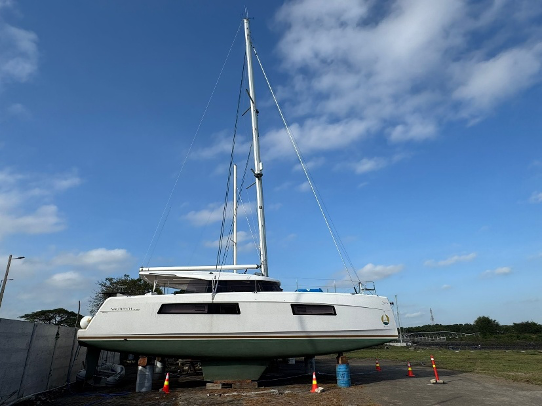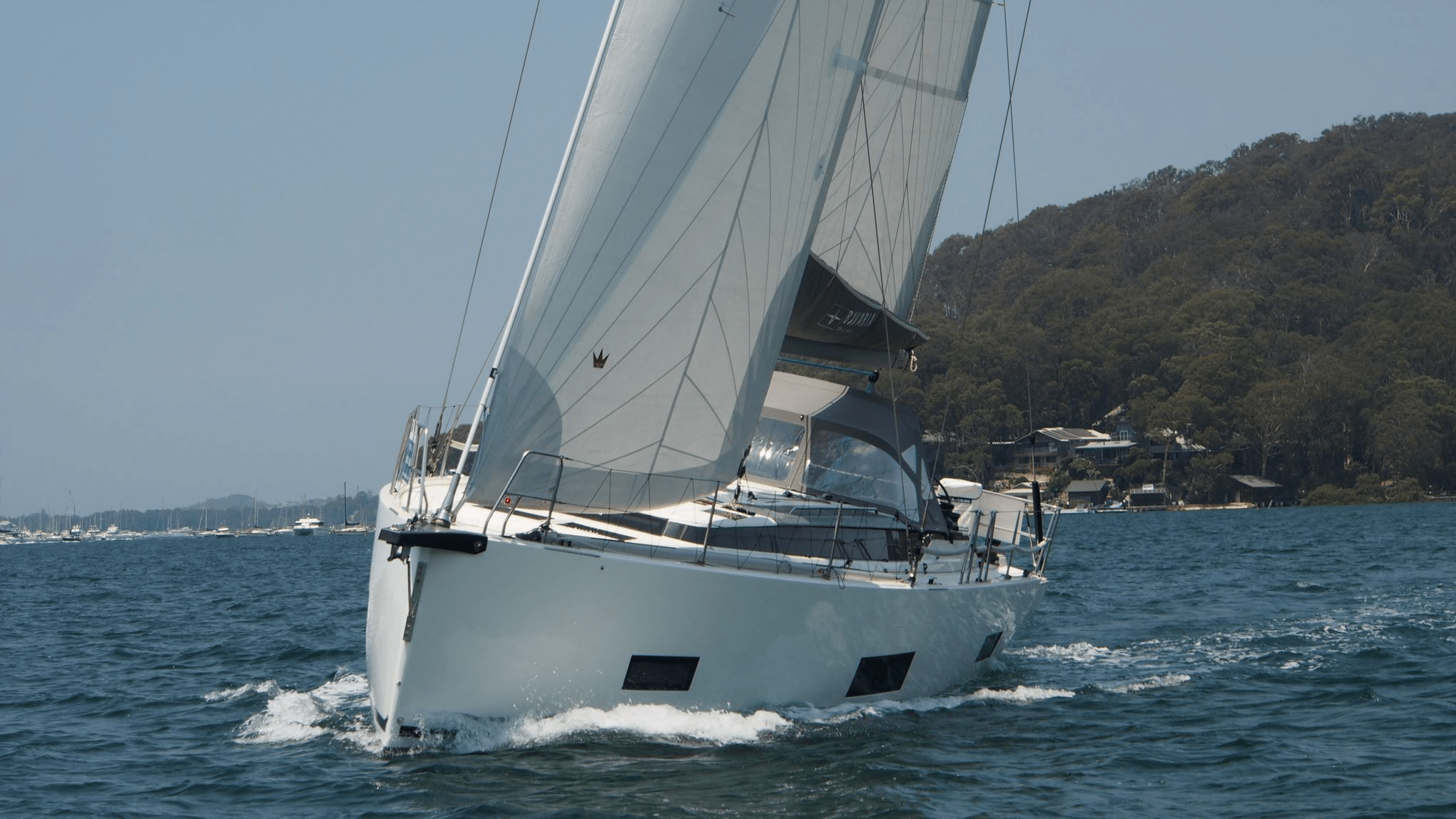
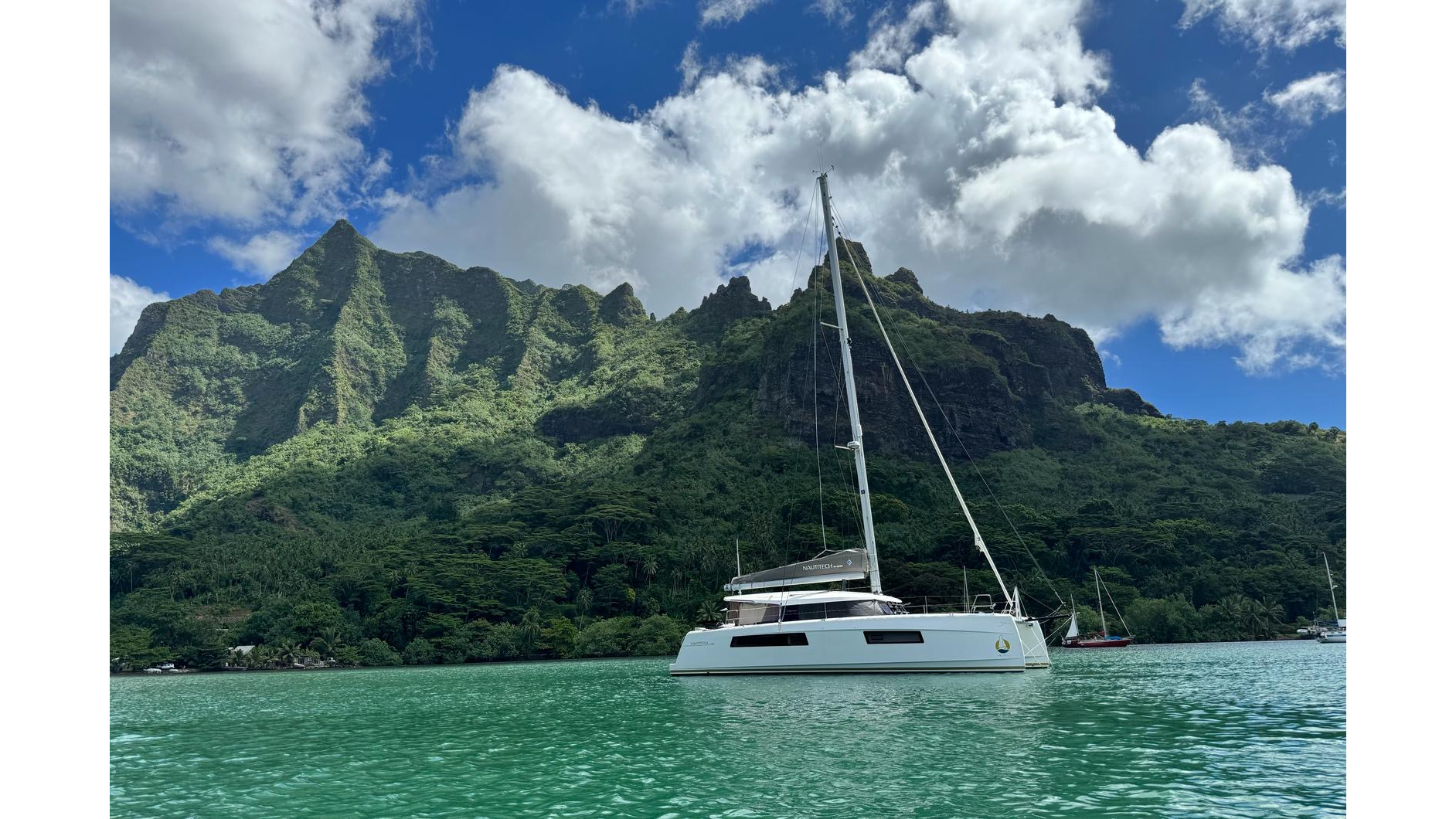
Check out this cruising recap from owner Axel aboard his stunning Nautitech 44 Open 'Solaris'.
Solaris has sailed nearly 25,000 nautical miles, and we’ve had very few issues with the boat. Inspections of the hull, rig, and interior revealed only normal wear and tear, and we look forward to continuing our journey next year.
We have sailed in both calm and rough weather, with winds up to 50 knots and 7-meter waves. We feel safe and secure on board under all conditions. The Nautitech 44 is easy to handle and performs well on autopilot in any weather. My wife and our guests have all been impressed by the boat – especially its layout with the bar and the spacious cockpit.
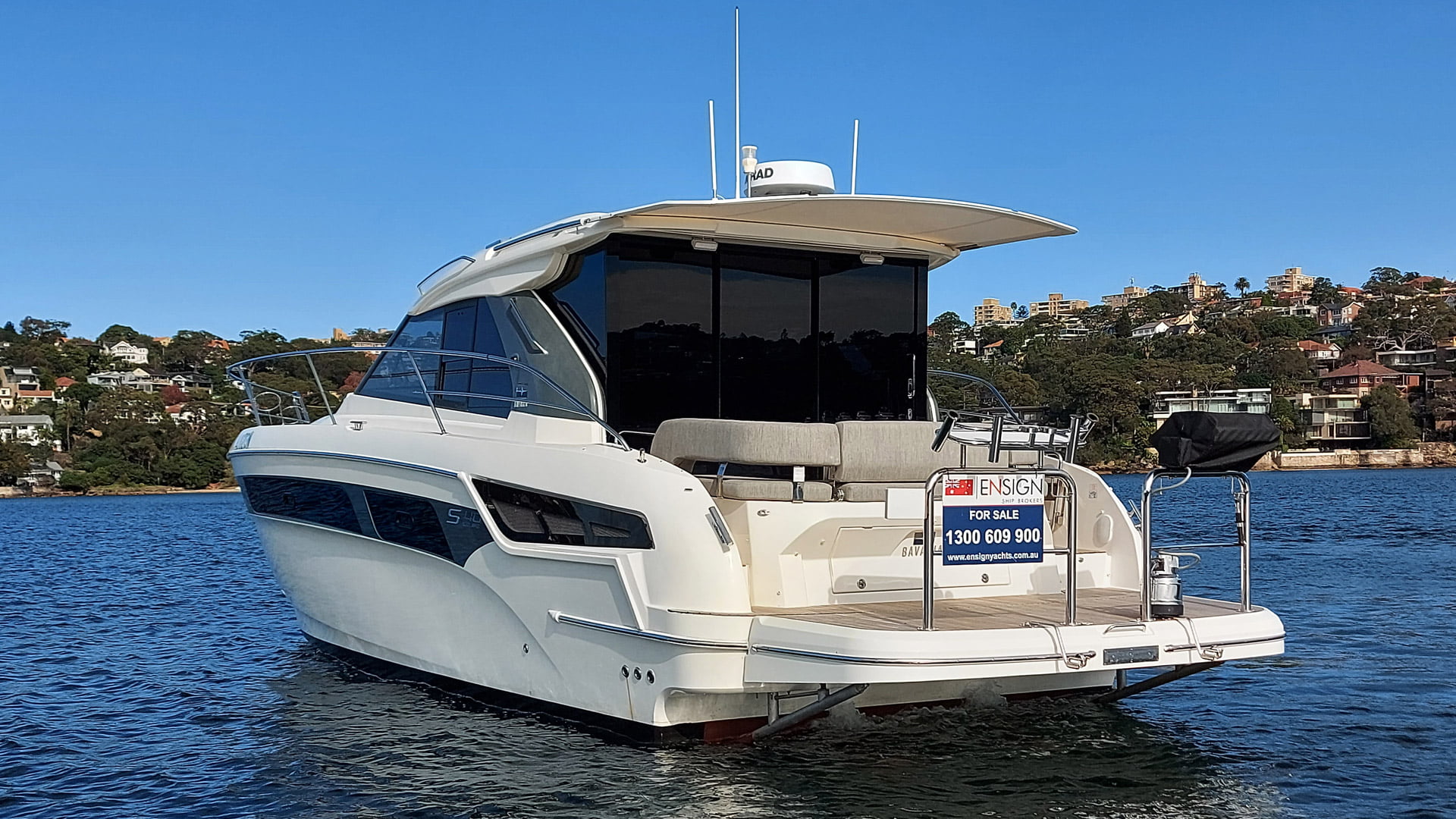
After participating in the World ARC 2024 from Saint Lucia to Mackay, Australia, and taking a break, it was time to move on. In the meantime, Solaris had been looked after by Nautitech’s Australian dealer, Ensign Yachts.
This year’s voyage was set to go from Cairns to Bali, part of it together with other boats participating in the Sail2Indonesia Rally.
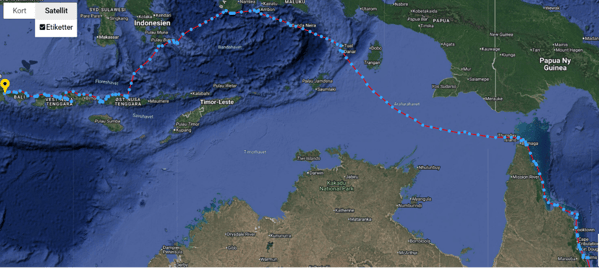
Here you can see the route of about 3,000 nautical miles, with the longest leg from Thursday Island to the Kai Islands in Indonesia – a stretch of 710 nautical miles.
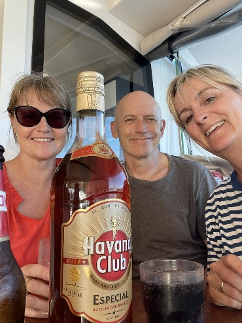
I prefer a small crew of three to four people – there’s more space for everyone, and provisioning for long passages is less demanding. For this trip, the plan was that during the first month, the crew would consist of my wife Lisbeth, her friend Pia, and me.
.jpeg?width=320&height=325&name=FullSizeRender%20(1).jpeg)
Checking out from Australia is a complicated process, and one must provide multiple copies of all documents – passports, health insurance, and boat papers. After we had left Australia, we were even boarded by the coast guard to make sure that everyone had officially departed the country.
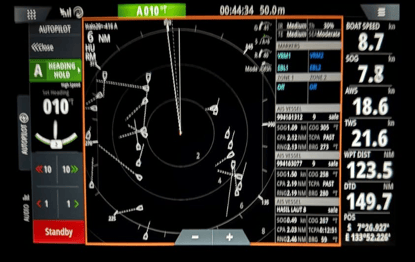
The sail to the Kai Islands went smoothly with 10–20 knots of wind on the beam. The biggest challenge was the many fishing boats after the Torres Strait. The fishermen set longlines up to 10 nautical miles in length, marked with AIS buoys. Below is an image from the chart plotter showing two longlines with a fishing boat at the front.
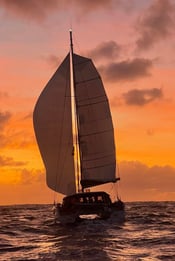
We arrived at the Kei Islands after five days at sea, having sailed 800 nautical miles at an average speed of about 6.5 knots.
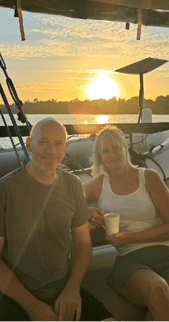
In the photo, Pia and Axel enjoy a cup of coffee in our beloved spacious cockpit.
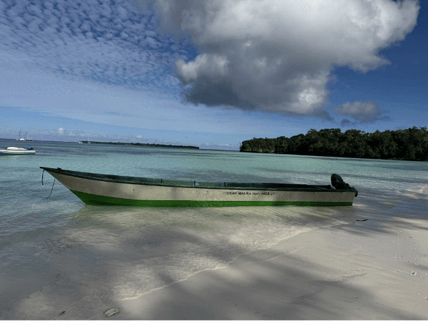
After Kei, the route continued to the Banda Islands, Ambon, Buru, and then south toward Timor, Sulawesi, and Bali.
Indonesia is the world’s fourth most populous country, with more than 270 million people spread across 17,000 islands, of which about 6,000 are inhabited.
Our next stop was the Banda Islands, only 190 nautical miles from Kei. Winds in Indonesia are generally light, so with an expected daily run of 150 nautical miles, we left Kei early in the morning to arrive at Banda before dark the following day. This worked perfectly – we arrived at 5 p.m., just before sunset.
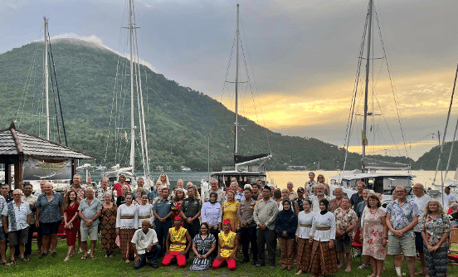
In Banda, you moor Mediterranean-style with a bow anchor and long stern lines ashore. Anchoring in the middle of the bay is impossible, as the depth between the islands reaches several hundred meters.
In the photo, you can see all the Sail2Indonesia participants, with Solaris on the right.
Our next major stop was Hoga, known for its stilt village.
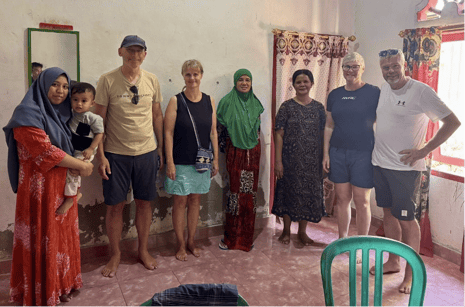
On the island of Hoga, Wakatobi, live the Bajo people, known as the “Sea Gypsies.” We visited their village and were deeply moved by the experience.
It’s hard to describe the feelings that struck us – the Bajo live in great poverty, yet they seem so happy and free.
They live off the sea, primarily fishing and collecting shellfish, which they sell on the nearby island of Kaledupa. There they also fetch their drinking water in jerrycans, which is boiled before use.
The children receive some schooling, though attendance depends on whether teachers can reach the village. Visitors are rare, and especially the children were fascinated by us white foreigners – constantly wanting to hold Lisbeth’s and Pia’s hands and take photos.
The beaches, again, were stunning.
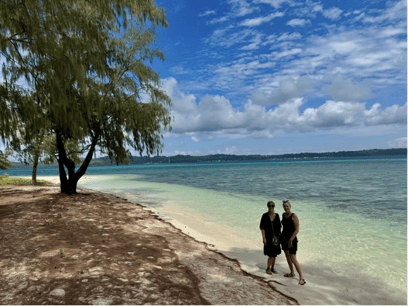
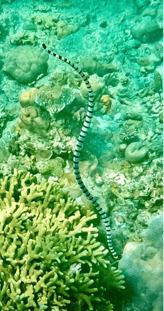
We did a lot of snorkeling in the area – the water was crystal clear and teeming with fish, beautiful corals, and a few, but strikingly elegant, venomous sea snakes.
From Hoga we sailed to South Buton, a 67-nautical-mile day sail. The anchorage was unfortunately deep (minimum 15 meters) with a rocky bottom offering poor holding. We managed to find a good spot in the bay and laid out about 80 meters of chain!
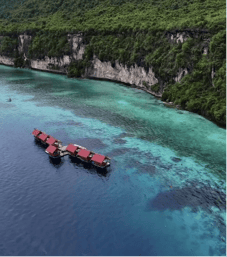
South Buton has a famous floating restaurant, which we visited and enjoyed a wonderful meal of fish and rice.
In South Buton, Pia left us and was replaced by Henriette and Flemming, who had traveled from Denmark.
Later we went on an excursion on the beautiful island, visiting a coffee plantation and having lunch in a private home. Once again, we were reminded of the simplicity of life in Indonesia – people live very modestly.
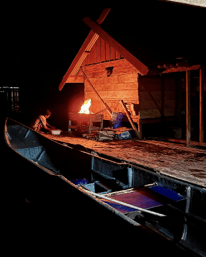
As seen in the photo, firewood is stored under the house to keep it dry during the rainy season. In most of Indonesia, people have neither electricity nor gas stoves, and food is cooked over an open fire.
After South Buton, we sailed 200 nautical miles southwest toward the large island of Flores, where we planned to visit the national park with the famous Komodo dragons.
The passage was easy – just one night at sea, with 5–15 knots of following wind, taking about 1.5 days. The biggest challenge, as usual, was the many floating fishing platforms, about 2×3 meters in size, scattered all over Indonesia. Most are unlit, and radar barely detects them because they’re made of light wooden frames. Even though the Nautitech is a strong and well-built catamaran, a collision could have caused serious damage.
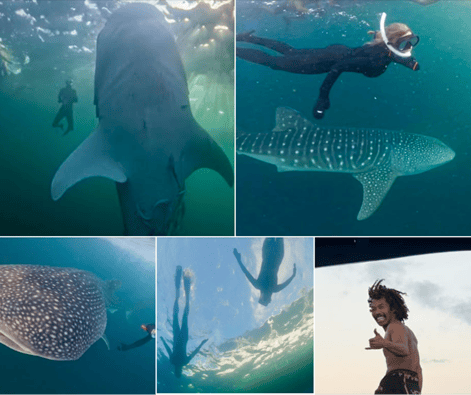
After the park visit, we continued to Sumbawa, where we went swimming with whale sharks – a once-in-a-lifetime experience!
The final great experience we had in Indonesia was attending a water buffalo race on Sumbawa.
It turned out to be an absolutely fantastic day at Barapan Kebo!
Barapan Kebo is a traditional and iconic cultural event from Sumbawa, typically held at the start of the rice planting season. Farmers and spectators gather in muddy rice fields to witness these spectacular buffalo races.
Was it better than swimming with whale sharks?
Well… maybe! The buffalo races had something truly special – mud, energy, and loads of local charm!
Our time in Indonesia was coming to an end, and it was time for some reflection.
Indonesia – The Good and the Hard 🇮🇩
Our voyage through Indonesia has been full of contrasts. On one hand, we’ve encountered poverty, chaos, litter, and unhygienic conditions that can be hard to process. In some places, both nature and towns are affected by waste, poor infrastructure, and limited resources.
But amid all this, we also found something else – and perhaps more important: ✨ warmth, genuine friendliness, joy, and openness.
People who share the little they have without hesitation.
Children who smile and wave while rummaging through a torn garbage bag, hoping to find something edible.
People radiating gratitude, respect, and love – even without a shared language.
It’s precisely this contrast that makes Indonesia so special to us – a journey through both outer and inner landscapes. 🌏❤️
Solaris is now safely stored on land in Banyuwangi, where it will stay until September 2026.